The Stages of Grief - Pet Loss Grief
Pet Grief Recovery
Knowing the different stages of grief and how they will affect you can be tremendously helpful in working towards pet grief recovery. It can also help you to know you are not alone in your grief and that pet death grief is natural and to be expected.
Let me begin by assuring you that you are not 'over reacting', you are simply reacting in a natural and expected way to the loss of a dear friend.

Bruno, Baby and Monkey - all at Rainbow Bridge
For some reason in our society even discussing human death and loss is seen as taboo and distasteful. This is at least in part due to the outdated traditional belief that grief was something you had to "work through" in order to reach a state called "closure", and that continuing to talk about those you have lost, or keeping their belongings around, or keeping their memory alive, was somehow detrimental to this work. Many people also feel that discussing such things is ‘tempting fate’ and unlucky in some way. Yet we all know death and loss in our lives is inevitable and natural.
Whilst it may still be a taboo subject, when a human dies their passing is marked by a funeral where eulogies are given and everyone who knew them comes to say goodbye as a mark of respect. They are given time and understanding and indeed expected to be devastated and need help. It is known and simply understood that as humans we need the ceremony of a funeral to help us in our time of grief.
There are a wealth of resources devoted to helping people who have lost a human loved one. This help is readily available in the form of grief support groups, grief and bereavement counseling and even dedicated grief support helplines.
Yet when a pet dies many people find themselves feeling totally alone and lost. If they choose to have their pet cremated or buried in a pet cemetery, or even put up a tribute, they can even find themselves the object of ridicule by non pet owners who simply do not understand that the passing of a pet is as real and devastating to that person as the passing of a human loved one.
In the depths of their despair when they are exhibiting the natural reactions to the stages of grief, they find themselves being told to ‘get over it’ or that it was ‘just a dog/cat/bird' etc.
As a multiple pet owner myself, I am constantly told by insensitive people whenever I lose a pet that it 'doesn’t matter because I’ve got another one.’
Of course it does matter, because I love each of my pets as individuals, because they are individuals and their loss could never be forgotten just because I have or may get in the future another pet.

Henry and George - both at Rainbow Bridge
Thankfully things are now changing for the better, with pet loss grief support helplines, pet loss and grief support websites, books about pet grief guidance and even pet grief cards becoming more widely available.
However, as a pet owner myself I still feel that there is a long way to go before pet death grief is accepted as as real and important as any other major loss.
Whilst help is now available, I have found from my own experience that it is often hard to find and there is simply not enough help compared to the number who find themselves needing it. I hope one day in the not too distant future that there will be help readily available for everyone needs it in the form of pet loss support helplines and even regular meetings of local pet loss grief support groups.
It is my hope that this website, and the community I am building, will in some way help to feel that gap.
When you are faced with the death of a pet, you may find you have to deal with all or some of the natural stages of grief that are experienced when dealing with a major loss.
In her ground breaking book,'On Death and Dying', Elisabeth Kubler-Ross identified the five stages of dying in 1969. It soon became evident during her work with not only the dying, but those they left behind, that these stages applied not only to accepting death but also to dealing with many other difficult life experiences including grieving. This led to her book "On Grief and Grieving", in which she explores how the five stages affected not only the dying, but those who care for them.
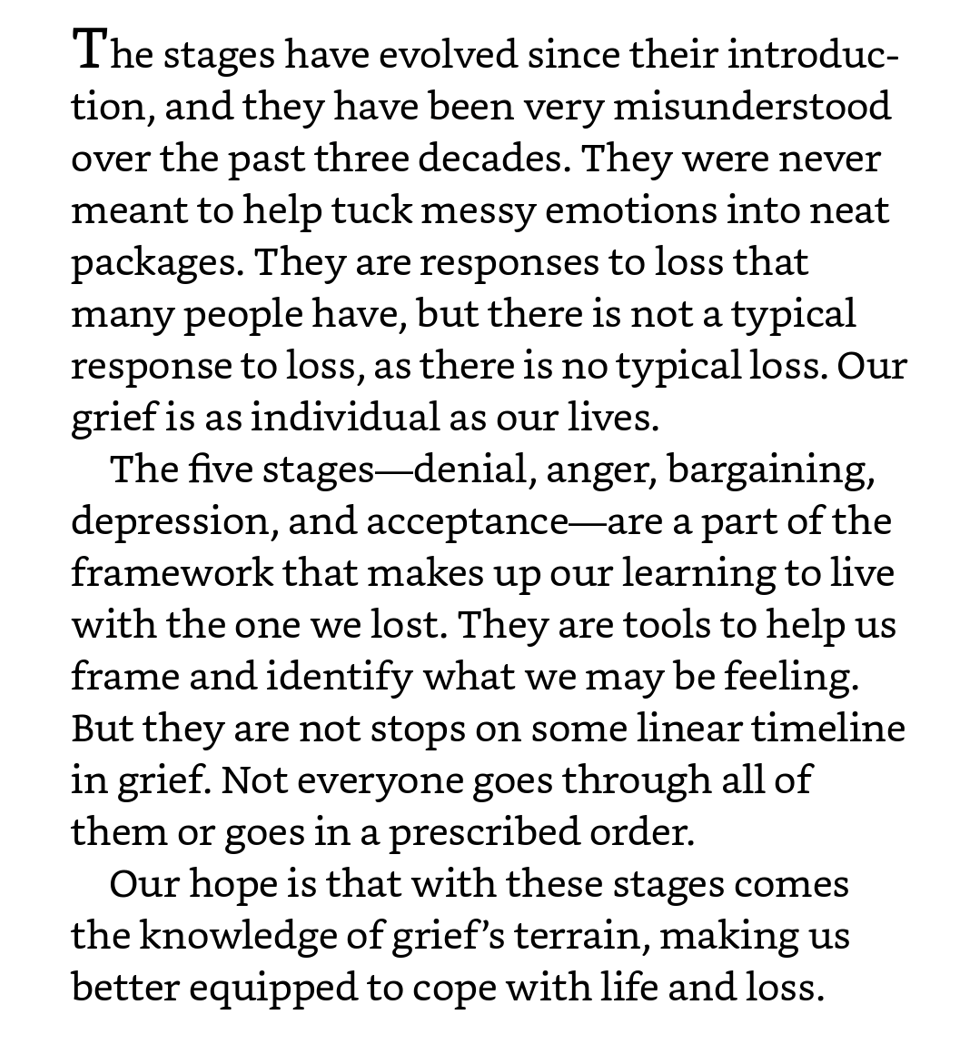
The five stages identified by Elisabeth Kubler-Ross are;
Stage 1 – Denial, shock and numbness
Stage 2 – Anger
Stage 3 – Bargaining
Stage 4 – Depression
Stage 5 - Acceptance
The 5 Stages of grief and dying were originally identified to define the stages of human loss, but it has long been acknowledged that the grief stages experienced when a person suffers the death of a pet and pet loss are identical to those of human loss.
In 1970 J Bowlby and C Murray Parkes, key workers in the field of human bereavement, also identified four phases representing the reactions of people grieving following the death of a loved one.
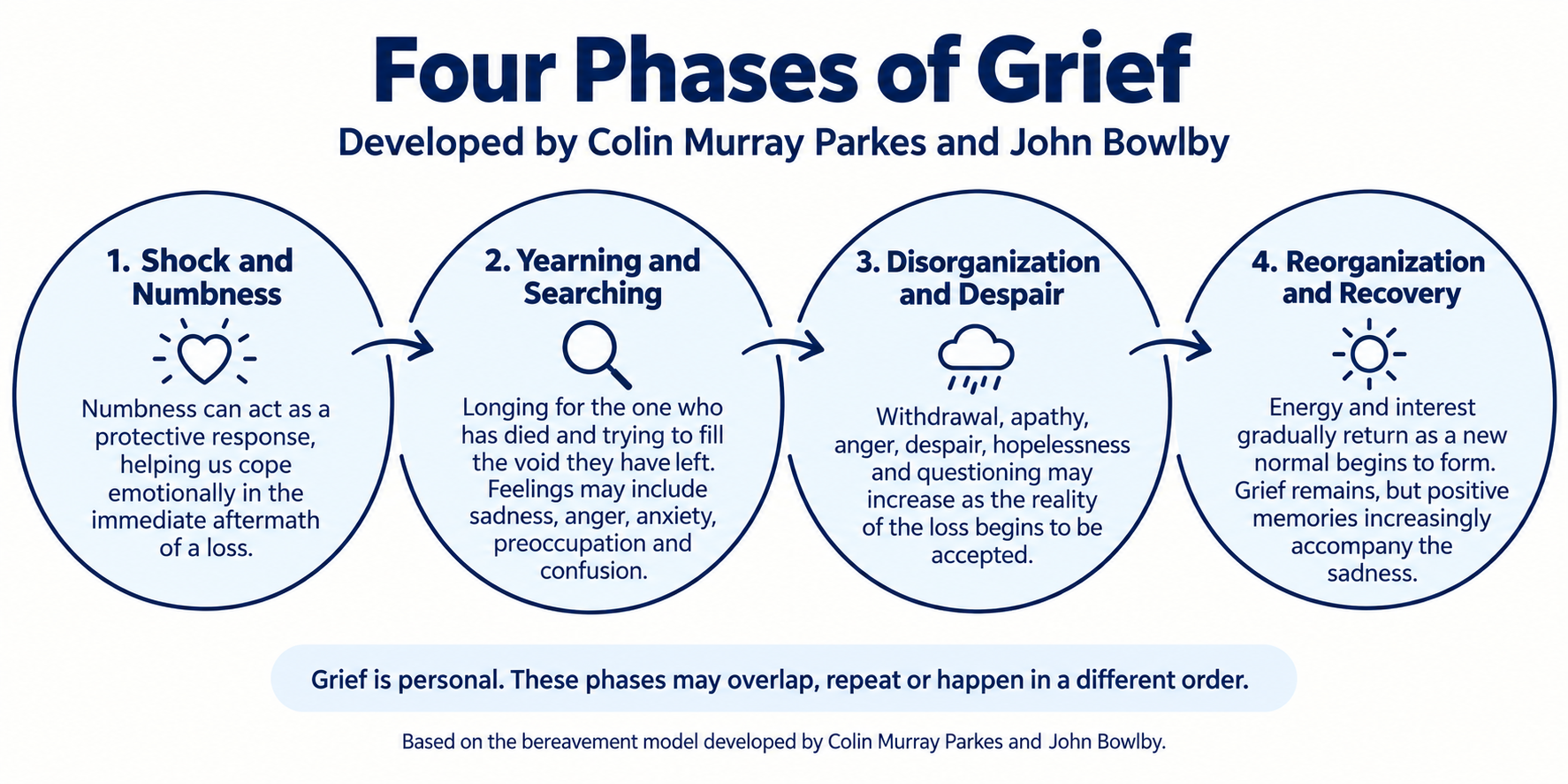
The phases they identified are;
Phase 1 – Shock and Numbness
Phase 2 – Yearning and Searching
Phase 3 – Disorganisation and Despair
Phase 4 – Reorganisation and Recovery
As you can clearly see the phases and stages of grief identified both have similar characteristics. You should remember though that these are just general guidelines and as each of us is unique, our experience of grief will also be unique.
You may find yourself experiencing the phases and stages of grief in a completely different order to the way they are represented above, you may find you become ‘stuck’ in a particular phase or keep moving back to it from another phase, oscillating between them, or you may find you miss out some phases altogether.
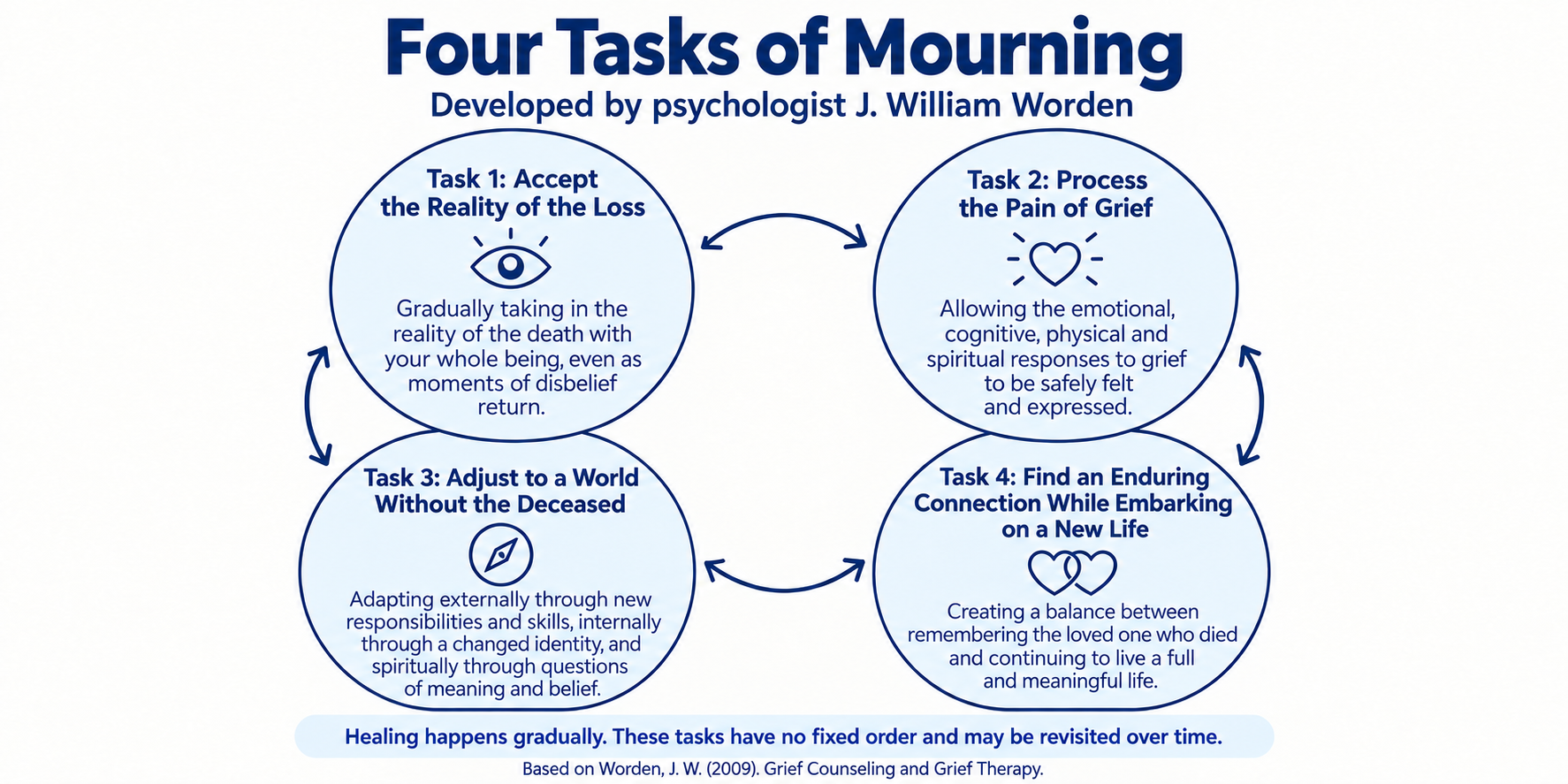
William Worden's 1982/2009 Four Tasks of Mourning is a framework that describes grief as an active, flexible process rather than a set of linear stages.
Healing happens gradually, as you address these tasks, in no particular order, and going back and forth between them over time.
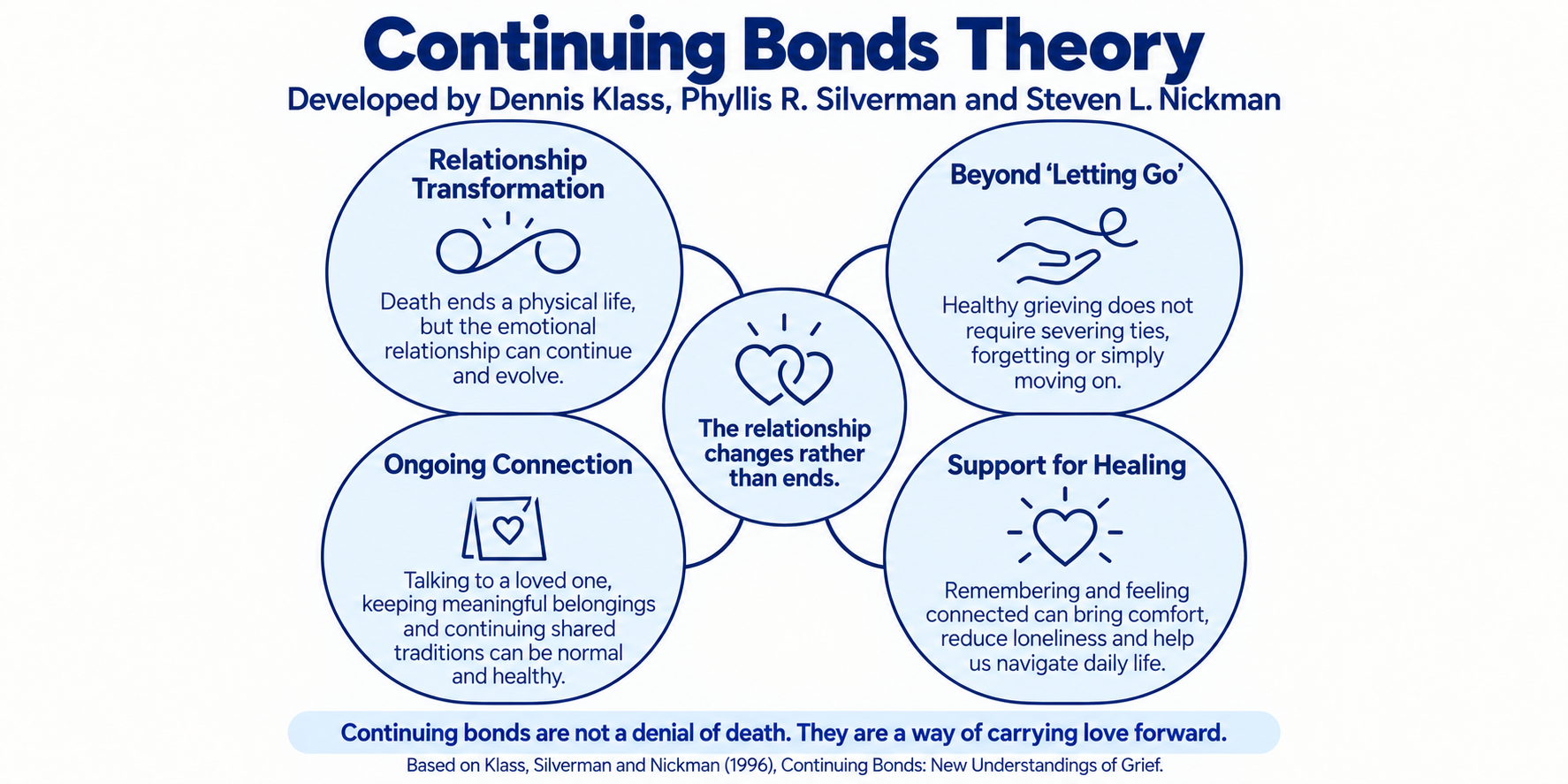
The Continuing Bonds Theory by Dennis Klass, Phyllis R. Silverman, and Steven L. Nickman in 1996 proposes that healthy grief involves maintaining an ongoing, evolving emotional connection with a deceased loved one rather than severing ties.
This theory represented a huge shift in bereavement psychology. For most of the 20th century, Western psychology viewed grief through the lens of detachment and "closure".
The traditional view claimed that a griever must actively perform "grief work". This meant withdrawing emotional energy from the deceased. If you kept talking to them or felt their presence, this was previously often classified as maladaptive coping or regression.
Thankfully today, that view is not the case. The Continuing Bonds Theory rejects the idea of "closure". Instead of "moving on from" a loved one, you "move forward with" them. Your lost loved one remains integrated into your identity, values, and future choices.
The previous traditional view created immense societal pressure to stop talking about the dead, clear away their things quickly, and look like you've recovered. Grievers who still felt deep connections years later often felt broken or ashamed.
The Continuing Bonds Theory instead, validates the everyday reality of loss. It explains that normal, healthy grieving includes behaviors like keeping a loved one's possessions, cooking their favorite meals, talking aloud to their photograph, or allowing their values, wisdom, and character to guide your choices and behavior long after they are gone.
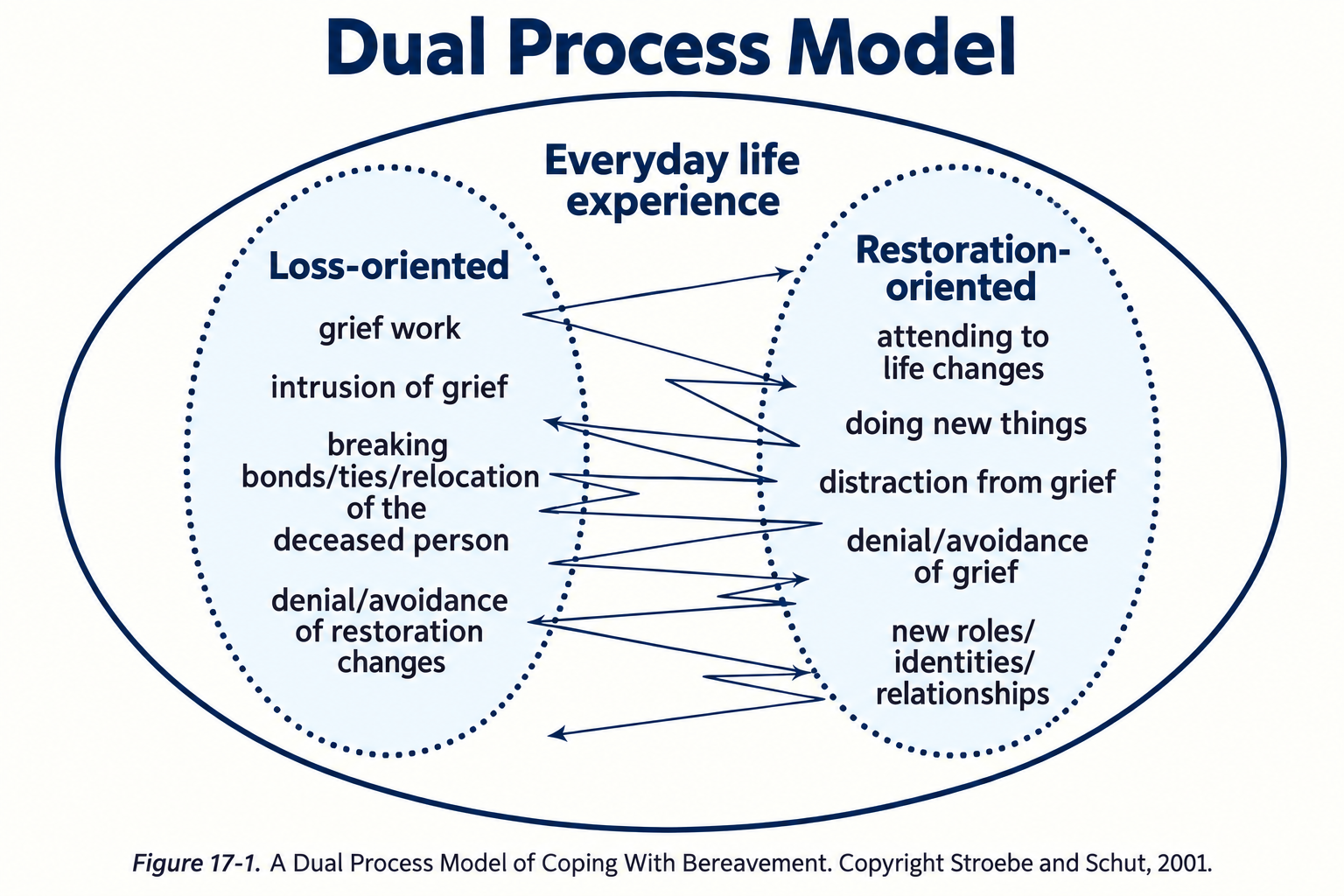
Later developed by researchers Margaret Stroebe and Henk Schut in 1999, the Dual Process Model of grief shows that grief is not linear, it is not movement along a straight line through a fixed set of stages. Instead, every day life experience of grief involves moving backwards and forwards (oscillating) between confronting the pain, and adjusting to life changes.
Grievers naturally move between these two states, between loss oriented tasks and restoration oriented tasks. This allows grieving in smaller doses, which is necessary, grieving is exhausting and overwhelming, and gives you permission to rest.
Rather than something to feel guilty about, and people often do, as though they are "moving on" or "forgetting" their pet, distracting yourself with new things, humour, or daily chores is a natural, normal and necessary coping mechanism which provides a temporary and needed relief from your pain.
Your experience of grief will depend on the circumstances of your loss, but I feel it is helpful to know about each of the phases, stages and models of grief, and how the understanding of grief has thankfully progressed, in order to help us work through our grief and move into Pet Grief Recovery.
Non pet owners may never understand or appreciate this fact, but it is a fact that many pet owners having suffered the death of a pet and pet loss find themselves missing and grieving for someone who filled a substantial chunk of their lives.
Is it any wonder then that when we experience the death of a beloved pet we find ourselves inconsolable?
I believe it is not only important to know and understand each element of grief, but it is of equal importance for each person to understand how they may be affected by each stage. Despite Elisabeth Kubler-Ross' Stages of Grief being previously misinterpreted by some as a linear straight line of stages to travel through, which is not what she intended, I do believe many people feel the effects of some or all of those stages.
You may well recognise your own experiences over the following pages where I explain them in more depth, many people do. Knowing about them and how you might feel, and that it is normal, can therefore be a comfort and guide during a devastating time, which is exactly what Elisabeth Kubler-Ross intended them for. Over the next few pages I will explain more about the phases and stages of grief and typical reactions to them, both mental and physical.
By educating ourselves in this way, we may then find each stage easier to deal with. You will know what to expect and feel less inclined as many people do, to feel as though you are over reacting and as though you must constantly apologise for your feelings and actions.
Click on the links below to read more about the reactions to and Stages of Grief:
The Stages of Grief - Reactions to Pet Grief
Grief and Pet Loss - Anticipatory Grief
'Denial'
'Anger'
'Anger' Part 2
'Bargaining'
'Depression'
'Acceptance'
Click here to return to the Pet Loss Matters Homepage



Click here to Read and Share Pet Loss Stories

Join Our
Pet Loss Support Group
Reading these shared experiences can help you feel less alone. Our community is where you can talk to people who truly understand.
Daily check-ins, live meetings (pyjamas welcome), and a gentle space to speak their name.
Chat with Our
Pet Loss Support Companion
If reading this has brought up something you’re carrying, you don’t have to sit with it alone.